
Structure
Ninety-six metres of acrylic
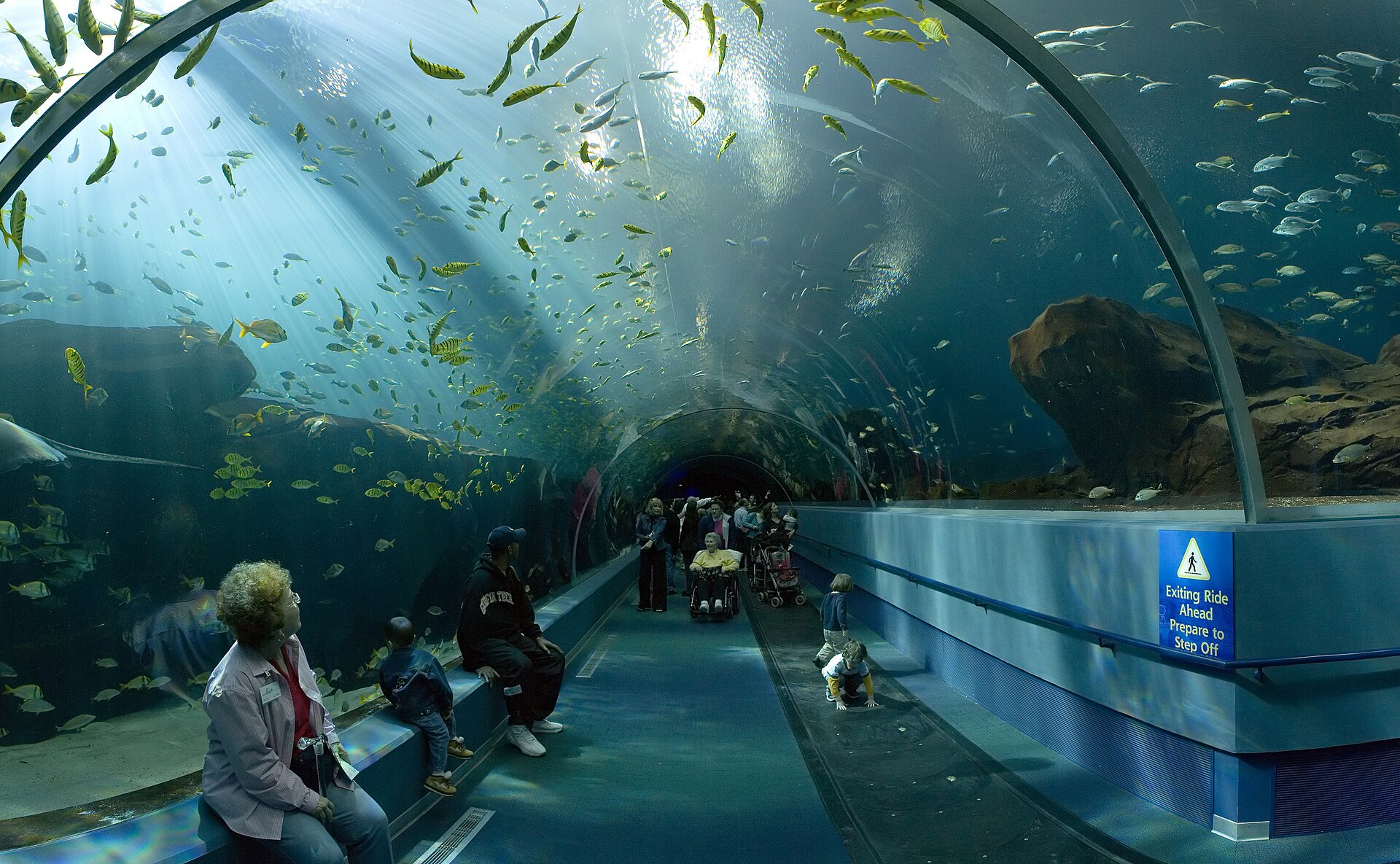
The shark tunnel is a laminated acrylic cylinder set into the floor of a very large tank. Public figures put the run at about ninety-six metres. Acrylic is used because it can be cast thick, polished optically, and joined without the green cast of most glass at that depth. The walls take the hydrostatic load; you are not holding the ocean up with a window pane.
Why they swim over you
Sharks in a display tank follow currents and the shape of the volume. A tunnel on the floor is an obstacle they would rather go over than squeeze around. Sand tigers, especially, hold mid-water. From inside the tube that reads as “they are flying.” They are using the water column the way they would use a channel over a reef. It is not choreography.
The moving walkway
A belt runs the length of the tube so groups do not stall in the first ten metres. You can step off. I do. The animals are not pacing the belt; you are. On a quiet morning the walkway is almost decorative. On a peak Saturday it crawls, and the view becomes a shuffle of shoulders. If you hate that, use the bypass.
The bypass corridor
There is a dry corridor around the tube for strollers, wheelchairs, and anyone who does not want a moving floor. You still see the tank through side windows. You miss the overhead pass. That is a fair trade if balance or a crowd would ruin the room.
This is downtown architecture with a habitat on top of it. The building is a machine. The animals did not ask for a tunnel. They adapted. Watch how they use the ridge; that is the interesting part.
Cameron Doyle · notes from the glass, not a box office